
7 Signs It’s Time to Find a New Ice Supplier

When your ice deliveries run smoothly and arrive on time, you probably don’t spend much time thinking about your ice distributor. 

That’s exactly how it should be. 

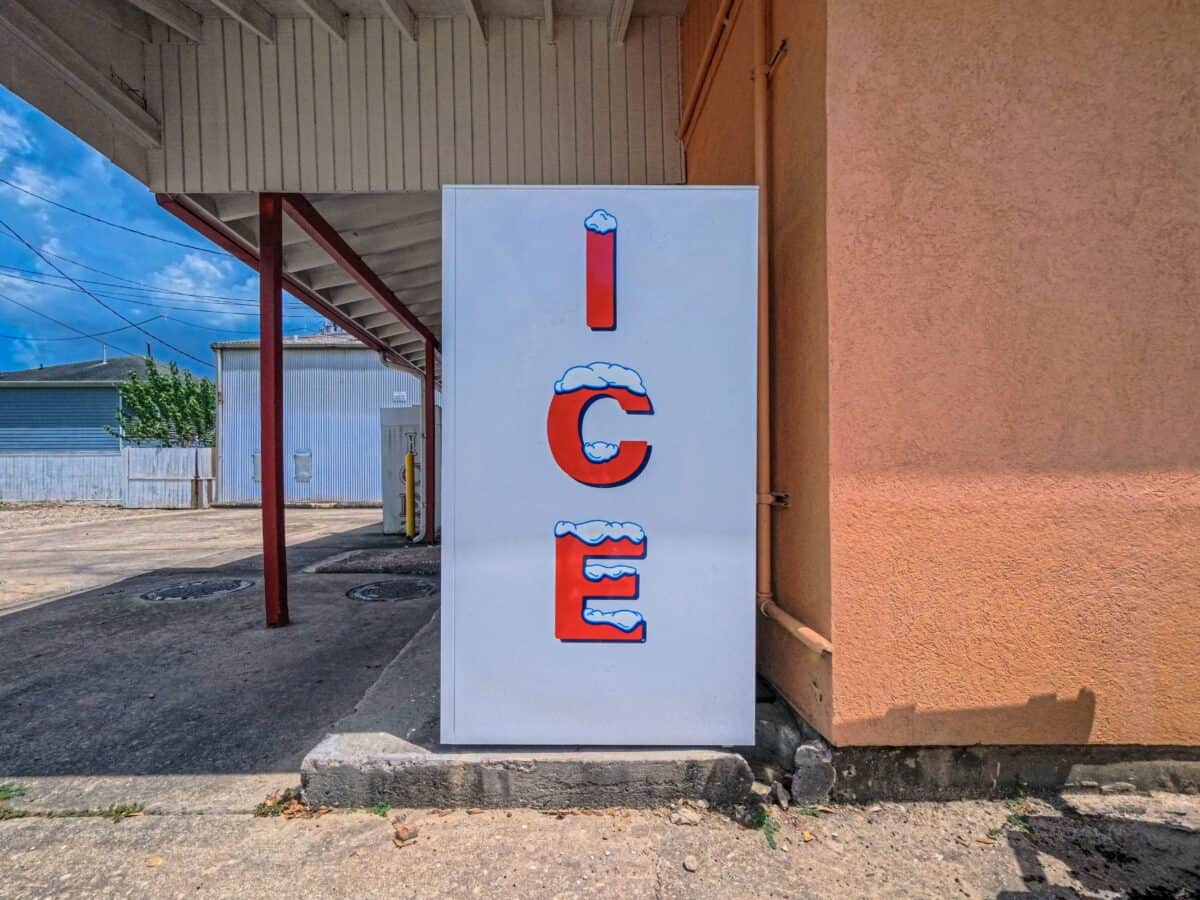
For gas stations, convenience stores, restaurants, bars, hotels, and other high-volume businesses, ice is one of the products that simply needs to be there. Customers expect to find clean, quality bagged ice in the freezer. Bartenders expect enough ice to make it through last call. Restaurant teams shouldn’t have to make an emergency run for bagged ice because an ice machine can’t keep up. 

If managing your ice supply has become another problem for your team to solve, it may be time to evaluate your current supplier, and decide if you are missing attentive, reliable, and consistent service. 

Here are seven signs your business may have outgrown its current ice distributor, along with what to look for when choosing a new one. 

1. You’re Running Out of Ice Between Deliveries

Occasionally, underestimating demand happens. Repeatedly running out of ice is different. 

For a convenience store or gas station, an empty ice chest represents potential lost sales. For restaurants, bars, and venues, an ice shortage can quickly become an operational problem and upset guests. 

In Las Vegas, demand can also change considerably depending on the season, weather, holidays, and nearby events and customer traffic. 

A dependable bagged ice supplier should help you stay ahead of demand rather than only delivering on a specific day of the week. 

2. Deliveries Are Frequently Late or Unpredictable

Reliable delivery matters when a product is essential for your operation. 

If your staff regularly has to call to find out where an order is, adjust operations around late deliveries, or purchase emergency ice somewhere else, the lowest wholesale price may not actually be saving your business money. 

Consider the labor involved. Sending an employee to buy 20 or 30 bags of ice means that person is away from their regular responsibilities. You are also paying retail prices, arranging transportation, and spending time solving a problem that should’ve been handled already. 

When comparing wholesale ice delivery in Las Vegas, don’t evaluate price alone. 

Ask potential suppliers about their delivery schedules, service area, order process, and ability to accommodate your changing demand.

3. Your Team Is Constantly Managing Ice Inventory

Store managers have enough inventory to think about already.

At a gas station or convenience store, your team may be monitoring beverages, snacks, prepared foods, tobacco products, supplies, and dozens of other categories. Restaurant managers are balancing food inventory, staffing, reservations, vendors, and daily service.

If every store manager is individually responsible for monitoring and ordering ice, one relatively simple product can create unnecessary work across the organization.

For multi-location businesses, this becomes even more important.

Ask your current supplier how they determine delivery quantities. Are you responsible for manually ordering every shipment? Does your distributor help monitor usage? Can orders adjust when demand changes?

4. Your Supplier Can’t Keep Up With Seasonal Demand

Las Vegas doesn’t have average ice demand all year long.

Summer heat, holiday weekends, conventions, tourism, concerts, sporting events, and other major events can all affect how much ice businesses need.

A convenience store that has no problem maintaining inventory during February may move through ice considerably faster during a hot July weekend. Bars, restaurants, hotels, and venues can experience similar fluctuations.

Your wholesale ice supplier should have the production and distribution capabilities to accommodate those changes.

Before your next peak season, ask:

“Can my current distributor scale with our demand?”

If the answer repeatedly seems to be no, it may be time to find a supplier with greater capacity. Planning ahead with a distributor that understands Las Vegas demand can help prevent the shortage to begin with.

5. You Don’t Know Where Your Ice Comes From

Here’s something that’s easy to overlook:

Ice is food.

Commercially packaged ice isn’t simply frozen water in a plastic bag. The U.S. Food and Drug Administration regulates packaged ice in interstate commerce as a food product.

That means sanitation, water quality, manufacturing conditions, equipment, employee hygiene, storage, and transportation all matter.

Businesses purchasing packaged ice should be able to ask their distributor where the product comes from and how it is manufactured.

Look for a supplier that can clearly explain:

  • Where the ice is manufactured
  • What water is used
  • How the product is handled and packaged
  • What sanitation standards are followed
  • Whether the operation undergoes third-party audits
  • How ice is stored and transported

Industry accreditation can provide another level of confidence. The International Packaged Ice Association’s Packaged Ice Quality Control Standards address water quality, sanitation, manufacturing practices, testing, storage, and distribution.

When you’re selling or serving a product people consume, “it’s just ice” isn’t a good enough quality-control standard.

6. Your Supplier Can’t Support Multiple Locations

One location and twenty locations have very different distribution needs.

As restaurant groups, franchises, and convenience store operators grow, managing separate suppliers or ordering processes for every location can become unnecessarily complicated.

If you’re expanding or operate several locations, ask whether your supplier can:

  • Deliver to multiple locations
  • Maintain consistent products across locations
  • Coordinate regular delivery schedules
  • Adjust quantities based on individual store demand
  • Support centralized purchasing
  • Handle larger total order volumes

This is especially important when expanding throughout the Las Vegas Valley.

A supplier may be perfectly capable of servicing one location but lack the distribution network required to reliably serve stores in North Las Vegas, Henderson, Summerlin, Downtown Las Vegas, and other parts of the valley.

7. You Don’t Have a Plan for an Ice Emergency

“What happens if your commercial ice machine stops working on Friday night?”

“What if demand suddenly exceeds your plans?”

“What if there’s a problem with the local water supply?”

“What if your usual shipment isn’t enough?”

These aren’t questions you want to answer in the middle of a busy shift.

For food-service businesses in Southern Nevada, having access to an approved packaged-ice source can also become important during certain water emergencies. Southern Nevada Health District guidance for boil-water advisories instructs food establishments to shut off ice machines connected to the affected water supply, discard affected ice, and use packaged ice from approved sources.

Even businesses that normally produce most of their own ice can benefit from having an established relationship with a commercial ice supplier.

Ask your distributor what happens when you need significantly more ice than usual.

If there isn’t a good answer, establish a backup plan before you need one.

What Should You Look for in a New Ice Distributor?

If several of these problems sound familiar, start evaluating potential suppliers based on more than price.

Look for a distributor that offers a combination of:

  • Reliable delivery
  • Consistent product availability
  • Food-grade packaged ice
  • Quality-control standards
  • Flexible delivery schedules
  • Inventory management
  • Local distribution capabilities
  • Multiple ice products and sizes
  • Multi-location support
  • Capacity for seasonal and unexpected demand

If you’re constantly calling, checking inventory, tracking down deliveries, or buying emergency bags at retail, your current arrangement probably isn’t accomplishing that.

Looking for a More Reliable Ice Distributor in Las Vegas?

Supreme Ice provides wholesale ice delivery throughout the Las Vegas Valley for convenience stores, gas stations, restaurants, bars, hotels, casinos, venues, and other commercial operations.

From regular packaged-ice replenishment to larger-volume commercial needs, our distribution model is built around keeping businesses stocked without making ice another thing their teams have to worry about.

We offer food-grade packaged ice, multiple product options, and local distribution to North Las Vegas to support businesses throughout the valley.

Contact Supreme Ice to discuss your current ice needs, delivery schedule, and locations, and request a custom wholesale quote.

How Much Ice Does Your Las Vegas Business Actually Need This Summer?

If you run a bar, restaurant, hotel, or event venue in Las Vegas, you already know summer isn’t a season. It’s a stress test. Between 110-degree afternoons, packed weekend crowds on the Strip, and events happening back to back in Henderson and Summerlin, running short on ice isn’t just an inconvenience. It’s a lost tab, a warm cocktail, a bad review, or a shut-down job site.

Here’s a practical breakdown of how much ice different Las Vegas businesses actually need, and how to make sure you never find out the hard way that you ordered too little.

Why Las Vegas Ice Demand Is Different

Most national guidance on ice usage assumes a mild climate and predictable foot traffic. Las Vegas has neither. Between the desert heat, the round-the-clock nature of casino and hospitality operations, and the sheer volume of weekend and convention traffic, local businesses burn through ice far faster than the national averages suggest. A bar that would need 1 to 2 lbs of ice per guest in a temperate city can easily need double that during a Strip weekend in July.

A Rough Guide by Business Type

Bars and Restaurants Plan for roughly 1.5 to 2 lbs of ice per guest per visit for drink service alone, and more if you’re also using ice for food display, raw bars, or beverage wells that need topping off through a long shift. High volume cocktail bars should build in a buffer for happy hour rushes, when ice wells get depleted in minutes, not hours.

Hotels and Casinos Ice demand here is nearly continuous. Ice machines on guest floors, banquet and catering service, pool bars, and back-of-house kitchen use all draw from the same supply. Properties that treat ice as a “top it off when it’s low” afterthought are the ones that run out in the middle of an event. A scheduled, automated delivery cadence matters more here than at almost any other business type.

Event Venues and Caterers Weddings, corporate events, and conventions are where ice needs spike hardest and most unpredictably. A good rule of thumb: budget for 1 to 2 lbs per guest for beverages, then add extra for any ice sculptures, ice bars, or food cooling stations. If your event includes an ice sculpture centerpiece, remember that those start life as 300 lb blocks, so you’ll want to order well ahead of the date, not the week of.

Construction and Industrial Sites Ice isn’t just for drinks. During Las Vegas’ hot months, block ice is a standard tool for concrete temperature control, keeping curing temperatures in range on afternoon pours. Crew hydration is the other big driver. A job site running a full shift in July heat should treat ice as a daily, essential supply line, not an occasional order.

Convenience Stores and Retail For retail, the math is less about volume per customer and more about never having an empty ice cooler on a 105-degree day. Automated inventory tracking that flags low stock before a weekend rush is worth more here than any per bag calculation.

The Real Risk Isn’t Running Low. It’s Running Out on the Wrong Day

Almost every Las Vegas business that’s been burned by an ice shortage has the same story: it happened on the busiest day of the month. A Saturday night on the Strip. A Friday afternoon pour. A convention weekend with three events happening back to back. Ordering “enough” on an average day doesn’t protect you from the days that actually matter.

That’s why the businesses that never think about ice again are the ones that set up standing weekly deliveries sized to their real peak demand, not their average day, with a supplier who can also handle the one time overflow order for a big weekend without notice.

What to Look For in a Las Vegas Ice Delivery Partner

  • A local distribution center, not a truck driving in from another state, so delivery windows are actually reliable during peak season.
  • Automated inventory management, so resupply happens before you’re calling in a panic.
  • Flexible order sizes, from 7 lb bags to 300 lb blocks, depending on whether you’re stocking a bar well or building an ice sculpture.
  • A track record with your business type, whether that’s high-volume hospitality, events, or job site cooling.

Ready to Stop Thinking About Ice?

Supreme Ice runs a dedicated distribution center in North Las Vegas and delivers food-grade block, crushed, and 300 lb bulk ice to bars, restaurants, hotels, casinos, event venues, construction sites, and retailers across the Las Vegas Valley, including Downtown, Henderson, Summerlin, and the Strip.

Request a custom quote based on your volume, schedule, and delivery needs, and stop worrying about the next hot Saturday.


The Convenience & Grocery Store Owner’s Guide to Buying Wholesale Ice

The Convenience & Grocery Store Owner’s Guide to Buying Wholesale Ice

Walk through any grocery store or convenience store, and you’ll find ice doing a job in almost every department. It’s in the cooler doors near the front, in the seafood and produce displays in the back, behind the deli counter, and at the fountain drink station. Customers buy it to take home. Your operation depends on it to function.

Despite how central ice is to daily store operations, most grocery and convenience store operators don’t give their packaged ice supplier much thought, until there’s a problem. A missed delivery on a holiday weekend. An inspection that flags uncertified product. A supplier who can’t scale when summer demand spikes.

Here’s what grocery and convenience store owners should know about sourcing wholesale ice and what to look for in a supplier who can actually keep up.

Ice Is One of Your Highest-Turnover Products. Treat It That Way.

For convenience stores, bagged ice is often one of the top five revenue-generating items in the building. It’s an impulse buy with strong margins, requires zero prep time, and maintains consistent demand across seasons. Customers who stop in for a bag of ice frequently pick up drinks, snacks, or other items while they’re in the store.

For grocery stores, ice plays a dual role. It’s a retail product customers take home, and it’s an operational input that keeps your fresh departments running. When you treat ice like the high-turnover product it is, managing it with the same attention you give to your top beverage SKUs or your fresh category, your supplier relationship starts to matter a lot more.

What “Food-Grade” Actually Means for Your Store

The FDA classifies packaged ice as a processed food. The ice you sell in your retail cooler and the ice you use in your fresh food displays is held to the same regulatory standards as any other food product on your shelves.

Food-grade ice is manufactured using water that meets EPA drinking water standards, in facilities built to prevent contamination at every step: equipment surfaces, storage conditions, packaging materials, and delivery vehicles. When a health inspector walks your store, the ice in your cooler doors and your produce department is fair game.

The gold standard for certification in the packaged ice industry is the PIQCS program, administered by the International Packaged Ice Association (IPIA). IPIA-certified suppliers pass a mandatory independent audit every year that covers everything from water source quality and facility sanitation to employee hygiene training and traceability coding on every bag. If your current supplier can’t tell you whether they’re IPIA certified, that’s worth knowing.

Every Department Has a Different Ice Need. Your Supplier Should Handle All of Them.

One of the reasons grocery and convenience stores benefit from a dedicated wholesale ice supplier, rather than buying opportunistically from a cash-and-carry or warehouse club, is the range of applications that need to be covered consistently.

Retail cooler doors and ice merchandisers. Bagged ice is your front-of-store revenue driver. It needs to be stocked before the first customer walks in, and restocked before you run out. A reliable supplier with daily delivery routes takes the guesswork out of that.

Produce and seafood displays. Fresh departments depend on block ice to maintain temperature and presentation throughout the day. This is food safety, and the ice needs to be food-grade to be compliant.

Deli and prepared food cold bars. Ice under cold trays and display cases keeps product at safe holding temperatures. Your health department expects it to meet the same standards as the food above it.

Fountain and beverage stations. Crushed ice is a daily consumable in any store with a fountain setup. High volume, fast turnover, and any quality issue shows up immediately in the customer’s cup.

Back-of-house and overflow coolers. Large-format block ice keeps bulk product cold during delivery gaps, high-demand periods, or unexpected equipment issues.

5 Questions to Ask Before Choosing a Packaged Ice Supplier

Whether you’re evaluating a new supplier or taking a harder look at your current one, these questions will surface what you actually need to know.

  1. “Are you IPIA certified?” This is the most important question on the list. IPIA certification means the supplier has passed a rigorous, third-party audit and is held to food-safety standards appropriate for a product going into your store and into your customers’ coolers.
  2. “Can you show me your audit documentation?” Any legitimate supplier will have certificates and audit reports ready to share. If the answer is evasive, take that seriously.
  3. “How often do you deliver, and what happens when demand spikes?” Summer weekends, holidays, and heat waves are exactly when your ice supply matters most. Ask your supplier how they handle peak demand before you find out the hard way.
  4. “What formats do you carry?” A strong wholesale ice supplier offers crushed ice for retail and beverage applications, bagged block ice for cold displays and take-home, and large-format block ice for back-of-house and high-volume needs. If they only carry one SKU, you’re either over-ordering or leaving needs unmet.
  5. “Do you use automated inventory management?” The best wholesale ice suppliers track your usage, anticipate your needs, and adjust delivery schedules proactively. You shouldn’t have to babysit your ice supply.

How Supreme Ice Serves Grocery & Convenience Stores

Supreme Ice was built for exactly this kind of retail relationship. Our production plant in Beaver, Utah draws from an award-winning water source and operates a fully automated, IPIA-certified facility that is audited annually by independent inspectors. Every product we ship is food-grade, fully traceable, and backed by the compliance documentation your store needs.

We offer three core products to cover the full range of grocery and convenience store ice needs:

  • Crushed Ice — Available in 7, 10, and 20-pound bags. The standard for retail cooler displays, fountain stations, and food service cold bars.
  • Block Ice — Long-lasting block ice built for produce displays, seafood cases, deli departments, and cold-chain storage.
  • 300lb Block Ice — Large-format blocks for high-volume back-of-house applications, overflow cold storage, and wholesale needs.

We deliver daily to store locations across Utah and Nevada, with distribution centers in Hurricane, Orem, and North Las Vegas. Our automated inventory management and handheld delivery systems ensure that your orders are accurate, your deliveries are on time, and your shelves stay stocked. Order today on our contact page!